DEEMO -Reborn-
- 4.0
- Rating
- 100.00K
- Installs
- $1.99
- Price

 Analysis by App-foxy
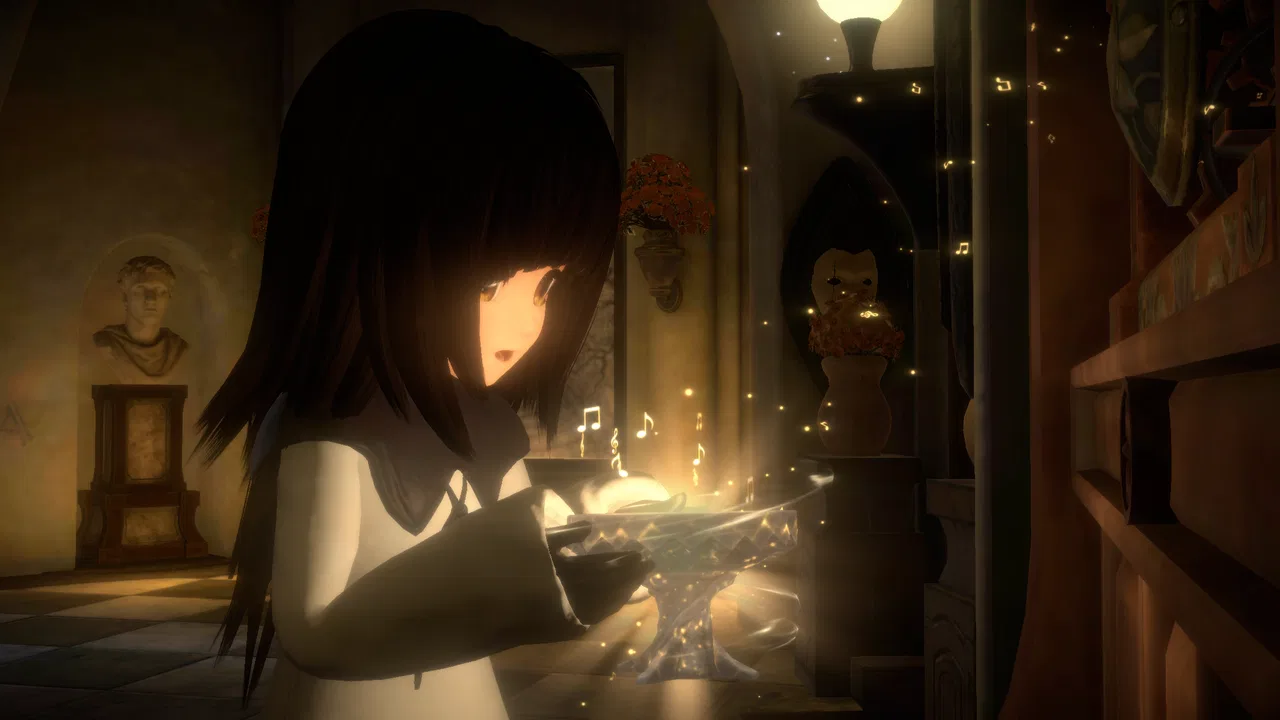
Some rhythm games ask me to chase perfect timing, while others mainly want to fill a few spare minutes. DEEMO -Reborn- sits in a more unusual place: it uses piano performance as the center of a story-driven adventure. I played it expecting a music game with a little decoration around the songs, but its identity is closer to an atmospheric journey where playing piano gradually gives the world more meaning.
That distinction matters before you download it. This is a game in the Music category, developed by RAYARK, and it is aimed at people who enjoy mood, discovery, and a strong visual setting as much as they enjoy tapping notes. The central idea is simple: a mysterious character plays piano while trying to help a girl connected to an equally mysterious world. I will avoid explaining the story’s turns, because the pleasure comes from discovering them at your own pace.
The game costs $1.99, carries an Everyone age rating, and has passed 100K installs. Its average score is 4.0 from around 4.5K ratings, with roughly 140 written reviews. Those figures suggest a solid audience rather than universal agreement, and that matches my impression: the game has a distinctive charm, but its slow, story-led structure will not suit every player.
You May Also Like

 AccuWeather: Weather Radar
AccuWeather Review: A Quick, Clear Forecast for Everyday Decisions
For everyday plans, the best forecast is the one you can understand quickly. AccuWeather makes rain timing, radar, and local conditions easy to act on, with a few trade-offs.

 Hill Climb Racing
Why Hill Climb Racing Still Turns Crashes Into One More Run
A tiny car, a bumpy hill and one more upgrade: Hill Climb Racing keeps resurfacing because its simple chaos makes every near-miss feel personal.

 AliExpress - Shopping App
AliExpress Makes Global Shopping Feel Personal, but Shoppers Bear the Risk
AliExpress turns a global marketplace into a pocket-sized discovery engine. Its reach is useful, its shopping loop compelling, and its trade-offs easy to miss.

 Lords Mobile: Kingdom Wars
Lords Mobile Is a Kingdom-Building Routine, Not a Quick Match
A case-by-case verdict on the building, battles, device demands, and social commitments that make Lords Mobile rewarding for some players and exhausting for others.

 PDF Scanner app - TapScanner
TapScanner Makes Paperwork Easier to Capture, Check, and Share
TapScanner makes scanning with a phone feel less like a rescue operation and more like a dependable step in getting work done. Its capture tools are useful, though not flawless.

 Block Blast!
 Shows How Much a Puzzle Game Can Leave Out
A quiet grid game shows why puzzle players increasingly value instant clarity, repeatable skill and low-pressure play—and where the genre still needs to catch up.
More From Our News Desk
View All News


A piano adventure with a very different rhythm
I find the best way to approach this piano adventure is to treat each visit as a small, deliberate loop: look around, notice what the scene is inviting me to do, then give the performance my full attention. That rhythm makes it easier to enjoy the story without turning every session into a score chase. Next, I’d check a few practical settings and play conditions before settling into that routine.
What the current experience feels like
The first thing I noticed was how strongly the piano shapes the atmosphere. In a conventional rhythm game, the song is often the entire event: choose a track, play it, see a score, and move on. Here, each performance feels connected to the surrounding world. The music is not merely a test of reflexes; it is part of the way the game communicates its setting and emotional tone.
The exploration sections give the experience breathing room. I spend time looking around, noticing objects, and working out what the environment is asking me to do. That makes the transition into a song feel more meaningful than a menu selection. It also means the game can feel quiet and deliberate, especially when I am used to faster rhythm titles that put me into a track almost immediately.
The piano interface is approachable, but it still rewards attention. Notes arrive along a lane, and success depends on pressing at the right moment. The basic action is easy to understand, which helps younger players and people who do not normally play rhythm games. The challenge comes from keeping concentration as patterns become busier and songs demand more precise timing.
I particularly like that the game does not treat difficulty as the only reason to continue. I want to return because I am curious about the next piece of the world, not just because I missed a few notes. That combination gives the experience a warmer, more personal feel than a score-focused arcade game.
Why the presentation matters
RAYARK clearly designed the game around atmosphere rather than visual noise. The setting has a storybook quality, and the piano performances support that mood instead of breaking it. When I play with headphones, the music becomes the strongest part of the experience, especially during quieter scenes where small details have room to stand out.
This is also why I would not recommend treating it as background entertainment. If I am distracted by messages or trying to rush through every conversation, I lose much of what makes the game special. The story is not just a wrapper around the songs, so skipping through the reflective parts makes the whole experience feel thinner.
There is a practical trade-off here. Players who want immediate action may find the opening and exploration slower than expected. Players who enjoy visual novels, atmospheric adventures, or narrative puzzle games are more likely to appreciate the pauses between performances. The game has a stronger identity because of that structure, but it is less flexible than a pure rhythm title.
How the current version fits into the experience
The current version is 1.1.4, and the game requires at least iOS or Android 11. For anyone using a reasonably recent device, that requirement is worth checking before paying, particularly if the phone or tablet is older and mainly used for basic apps. A music game that combines animated scenes, exploration, and timing input benefits from a device that feels responsive.
I would also install it on the device where I am most comfortable using headphones and tapping accurately. A larger screen can make the note lanes easier to read, but a phone is more convenient for short sessions. The best choice depends on whether I value portability or a clearer view of the play area.
The game includes in-app purchases ranging from $0.99 to $31.99 per item. That is important because the initial purchase is not the whole monetization picture. I would check the available content and decide whether I am happy with the base experience before considering optional additions. The presence of higher-priced items does not automatically make the game poor value, but it does mean I would avoid buying extras impulsively.
What appears to have changed over time
The release date is December 6, 2020, while the current version is 1.1.4. That tells me the game is not being presented as a brand-new launch; it has moved beyond its original release state. I see that as useful context for existing players. A version number like this indicates an established product with ongoing revisions, but it does not by itself promise a particular future roadmap.
From a player’s point of view, the most important effect of a later version is confidence that the game has had time to settle into its intended form. I would still judge it by the experience available now rather than by hopes for major additions. The story, exploration, and piano structure are the reasons to play it today, not a guarantee that future updates will transform it into something else.
That distinction is especially important for people who remember earlier versions. Updates can improve the way a game feels without changing its core identity. If someone disliked the slow narrative approach from the beginning, a version update is unlikely to make this suddenly resemble a fast, competitive rhythm game. On the other hand, a returning player who already liked its mood may find the current build a more sensible point to revisit.
What existing players should know before returning
If I had played it before and was coming back, I would first replay a short section rather than immediately purchasing every optional item. That gives me a chance to remember how the timing feels, whether the story still holds my interest, and whether my current device is comfortable for longer sessions. It is a simple way to separate nostalgia from genuine enjoyment.
I would also keep my expectations focused. The strongest reason to return is the combination of music and atmosphere. Returning solely to chase a perfect score may be frustrating if I am not prepared to practice the same patterns repeatedly. The game is more rewarding when I alternate between story progress, exploration, and songs instead of turning every session into a performance test.
One useful habit is to play with the sound clearly audible and visual distractions reduced. The piano is not decoration; it is feedback. When I can hear the beat properly, timing feels more natural, and the emotional impact of a song is easier to appreciate. This is a small adjustment, but it makes a noticeable difference compared with playing silently or while surrounded by competing audio.
Another practical tip is to avoid judging a session by one difficult performance. Rhythm games can make a single missed sequence feel more important than it really is. I get more from the game when I treat mistakes as information: I listen for the rhythm, watch how the pattern enters the lane, and try again after a short break. That approach is calmer and more effective than tapping harder or rushing.
Where it still asks for patience
The biggest limitation is pacing. The game wants me to absorb its world, and that means it does not always deliver immediate musical action. Someone looking for a quick playlist of songs with minimal interruption may prefer a traditional rhythm game. Those alternatives usually make it easier to select a track, set a difficulty, and focus entirely on performance.
The narrative can also create a commitment that casual players may not want. I cannot treat every session as a self-contained song challenge because the surrounding scenes are part of the design. That is a strength for me when I am in the right mood, but a weakness when I only have a few minutes and want a direct game loop.
The purchase structure deserves attention too. The $1.99 entry price is approachable, but the additional purchase range means the overall cost can rise depending on how much optional content I want. I would recommend setting a personal spending limit before exploring the extras. That keeps the game’s value clear and prevents the initial price from creating unrealistic expectations about everything being included.
There is also a difference between accessibility and simplicity. The controls are easy to grasp, but later songs can still demand concentration. Players with limited dexterity or those who dislike timing pressure should try the early sections carefully before deciding whether to continue. The Everyone rating describes the audience suitability, not the absence of challenge.
Who should play it, and who should skip it
I would recommend it to someone who wants a music game with a story, a mysterious setting, and a more reflective pace. It is a good fit for evening play, especially when I want something absorbing but not aggressively competitive. It also suits players who enjoy discovering why songs and locations matter rather than simply collecting high scores.
A realistic everyday use case is a quiet commute or a short break at home with headphones. I can play a little, explore a section, and stop without needing the intensity of a multiplayer match. On a longer evening, I can give the story more attention and let the music become the main focus. The same game supports both habits, as long as I accept that progress is designed to unfold gradually.
I would skip it if my priority is a large, instantly browsable music library, constant score competition, or very rapid sessions. In those situations, a conventional rhythm game is the better choice because it puts song selection and replay value ahead of narrative atmosphere. I would also hesitate if I dislike buying a game and then seeing optional purchases offered inside it.
Compared with a story adventure without rhythm mechanics, this game gives me a more active role in the emotional progression. Compared with a standard piano or rhythm title, it offers more context and exploration but less immediate freedom. That middle ground is exactly its appeal, and also the reason it will divide players who expect one genre or the other.
What I would watch before committing
Before buying, I would check the operating-system requirement and make sure the device runs at least Android or iOS 11. I would then consider where I plan to play: headphones and a stable touch response are more important here than they might be in a simple puzzle game. These checks take little time and prevent avoidable disappointment.
I would also decide whether I am paying for a complete mood-driven experience or shopping for an endlessly expandable rhythm library. The first expectation matches the game much better. The second makes the purchase and optional content harder to evaluate, because the game’s main value is its particular blend of story and piano rather than unlimited customization.
For existing users, I would watch how future revisions affect reliability and usability while remembering that version updates should not be confused with a new genre direction. The current product has a clear personality. Any improvement is most valuable when it protects the smooth connection between exploration, narrative, and performance.
My final recommendation
After spending time with it, I see DEEMO -Reborn- as a focused experience rather than a universal music-game recommendation. Its best moments come when the piano, the world, and the story reinforce one another. I enjoy the feeling that a song is doing more than filling a level; it is helping me understand the place I am exploring.
The game is not perfect for impatient players, score specialists, or anyone who wants to avoid optional purchases entirely. Its pauses can feel long, and the extra-content model deserves a deliberate approach. Still, the $1.99 price makes the initial decision relatively approachable for players who are curious about its unusual format.
My advice is simple: choose it for atmosphere, narrative curiosity, and piano-based play, not for the fastest possible rhythm action. If that sounds like your kind of evening game, RAYARK’s combination is distinctive enough to recommend. If you want a pure track-selection experience, you will probably be happier elsewhere. For me, the slower pace is worth accepting because it gives the music a role that ordinary rhythm games rarely attempt.
FAQs for DEEMO -Reborn-
01What is DEEMO -Reborn-?
DEEMO -Reborn- is a story-driven rhythm adventure game inspired by Rayark’s original DEEMO. It combines piano-based music gameplay with exploration, environmental puzzles, and an emotional fantasy narrative. You follow a mysterious girl and the enigmatic Deemo as they search for a way to help her return home. The game places strong emphasis on atmosphere, music, visual presentation, and storytelling rather than fast-paced action.
02How does the gameplay work in DEEMO -Reborn-?
The game alternates between exploring beautifully designed environments, solving light puzzles, interacting with characters, and playing rhythm sections. During musical performances, notes move toward a timing line and must be tapped accurately in sync with the piano pieces. Exploration gradually unlocks new songs and story content, while improved rhythm performance can make the musical sections more rewarding for players who enjoy mastering challenging tracks.
03Is DEEMO -Reborn- suitable for beginners?
Yes, DEEMO -Reborn- is generally approachable for beginners, especially those who enjoy narrative games or relaxing music experiences. The rhythm mechanics offer different difficulty levels, allowing new players to start with simpler charts before attempting more demanding arrangements. Some puzzle and exploration sections may require observation and patience, but the game is not designed around constant pressure, making it accessible to casual players as well as rhythm-game fans.
04Does DEEMO -Reborn- require an internet connection?
The main experience is designed to be played offline after installation, which is useful for players who want to enjoy the story and music without a continuous connection. However, availability of certain features can depend on the platform version, updates, licensing, or optional downloadable content. It is recommended to install the latest version while connected to the internet and check the store listing for current requirements before downloading.
05What should I check before downloading DEEMO -Reborn-?
Before downloading DEEMO -Reborn-, check that your Android or iOS device meets the listed operating-system and hardware requirements, since the game includes detailed 3D environments and can require considerable storage. Also confirm the available free space for the initial installation and updates. Players should review the store page for pricing, in-app purchases, supported languages, controller compatibility, and whether their device is officially supported.
Pros
- Beautiful hand-drawn visuals and atmospheric environments.
- Emotional piano soundtrack that complements the story perfectly.
- Rhythm gameplay feels responsive and satisfying to master.
- Exploration adds variety beyond standard music-game stages.
- Strong narrative encourages players to uncover every mystery.
Cons
- Some songs and content require additional purchases.
- Difficulty spikes can feel frustrating for less experienced players.
- Touch controls may be less precise on smaller screens.
- Story progression can be slow between musical performances.
- The game requires considerable storage space on some devices.

DEEMO -Reborn-
Gallery